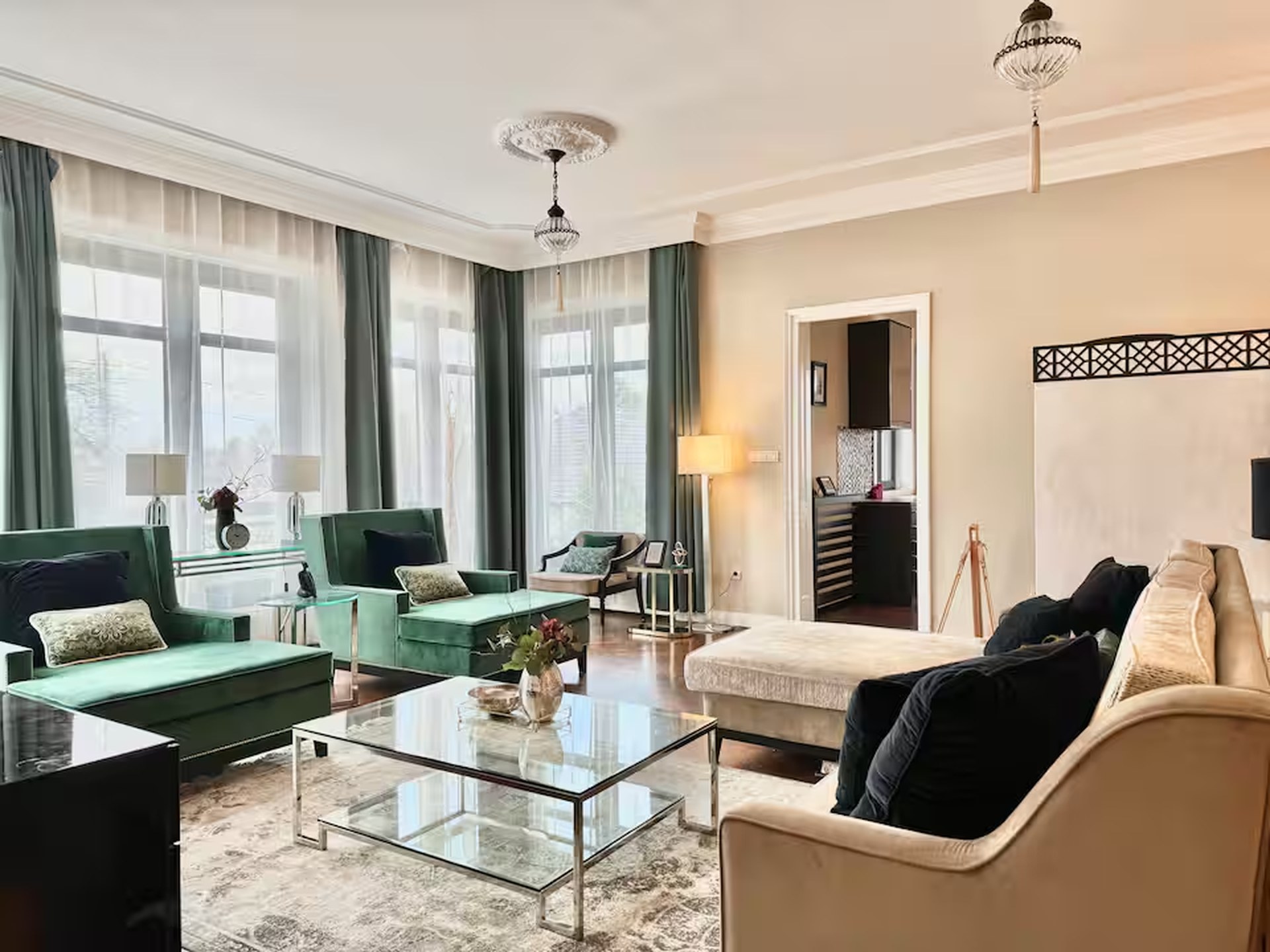
Budapest's short-term rental market is now more mature, and — still — one of the best yield opportunities in Central Europe, provided the operation is run at a professional level. But the days of "I'll just throw it on Airbnb" are over. What used to scrape by a year ago now loses money; what once delivered above-market yield now requires real operational discipline to sustain.
The regulatory landscape in 2026
As of May 2026, Budapest does not impose a general licensing requirement on short-term residential rentals; districts do not require a separate permit either. Short-term accommodation registration with NTAK and the tourism tax (IFA) — uniformly applied across all Budapest districts — remain baseline requirements. A new regulatory framework is expected to come into force from January 2027 — owners are advised to track market and policy updates so they can adapt in good time.
In practice, the following are worth verifying first:
- Building bylaws (SZMSZ) — whether short-term rental is outright prohibited, or merely capped (e.g. max. 90 days/year)
- Tax registration — NTAK, IFA, SZÉP card acceptance, and the post-KATA shift to flat-rate personal income taxation
- Upcoming regulatory change — the latest details of the new framework expected from January 2027
"The question today isn't how much you can charge — it's how stable your positioning and operations are when the regulatory environment shifts."
Yields by district
The table below shows average market data for Q1 2026 for a well-equipped, 50–60 m², one-bedroom apartment under full operational management. ADR (Average Daily Rate) and occupancy reflect our experience — but every property is individual.
| District | Avg ADR | Occupancy | Monthly net yield* |
|---|---|---|---|
| V. (Inner City) | 42,000 HUF | 78% | ~720,000 HUF |
| VI. (Terézváros) | 34,000 HUF | 72% | ~540,000 HUF |
| VII. (Erzsébetváros) | 32,000 HUF | 70% | ~490,000 HUF |
| VIII. (premium part) | 28,000 HUF | 65% | ~400,000 HUF |
| IX. (Ferencváros) | 30,000 HUF | 68% | ~440,000 HUF |
| XIII. (Újlipótváros) | 31,000 HUF | 67% | ~445,000 HUF |
*After operating cost, cleaning, platform commission, and IFA — before personal income tax. Source: ST Management portfolio data, Q1 2026.
The three most common pitfalls
1. Underpricing at the start of the season
Most owners set a fixed, low price in January and February and only raise it once occupancy stabilises. Dynamic pricing (Pricelabs, Beyond, Wheelhouse) consistently delivers 6–14% higher RevPAR — especially in the April-to-June shoulder season when demand rises sharply but unprepared listings are still priced like it's deep winter.
2. Poor guest experience
Guest expectations have jumped over the past two years: fast Wi-Fi (min. 300 Mbps), self check-in via smart lock, a fully equipped kitchen, and quality linens. Without these, the review average falls below 4.7, and platform visibility drops sharply — often by 30–40% in search ranking.
3. Insufficient operational capacity
One failed cleaning, one 7 am guest locked out — two or three critical reviews, and the listing struggles for weeks. Owners unable to commit to 24/7 readiness (either in-house or with a professional partner) typically see occupancy trail the market by 10–15 percentage points.
When it does make sense — and when it doesn't
Short-term rental pays off fairly when the property sits in the city core (15 minutes' walk from the Danube), the layout is guest-friendly (proper separate bedroom, no walk-through arrangement), and the owner is willing to invest in initial setup (typically HUF 2.5–4 M for a 50 m² flat). Without these, "I'll put it on Airbnb" often delivers worse yield than a properly priced long-term let.
If you're uncertain which category your property falls into, it's worth starting with a free positioning consultation. An on-site walkthrough, district-level benchmarking, and a first-year financial plan will quickly clarify whether short-term rental, a hybrid model (longer stays plus seasonal short-term), or classic long-term letting is the right fit.